
How to Eat Out for Two Weeks in Japan - Without Gaining a Pound
I recently traveled around Japan — Tokyo, Kyoto, Yokohama, the usual hits. I ate out a lot. I tried plenty of new foods. And when I got home, the scale hadn’t moved at all.
Honestly, this surprised myself.
Here’s what I learned about staying lean in Japan without dieting, feeling deprived, or missing out.
First, a reality check about the “healthy Japanese diet”
When people talk about how healthy Japan is, they’re usually talking about home cooking, not restaurant food.
Traditional Japanese eating is simple: lightly cooked food, fermented ingredients, small portions, and stopping when you’re about 80% full (hara hachi bu). That mindset matters.
If you land in Japan thinking you can walk into any restaurant, eat anything, and magically lose weight — you’ll be disappointed. Restaurants are restaurants everywhere. Japan is no exception.
How I handled restaurants
I skipped restaurants when they were not necessary. Even then, be prepared to eat in one at least 60%- 70% of the time. Selecting them carefully helped me a lot (it also helped daily dithering over where to eat in a megapolis overflowing with glorious choices).
My go-to options:
Sushi restaurants
Teishoku (set-meal) places — especially fish and steamed dishes
My favorite was Ootoya. Yes, there are often lines. But they move fast, it’s inexpensive, and the meals are balanced. They also subtly encourage mottainai — not over-ordering and not wasting food.
A few simple rules helped:
Skip dessert
Drink the (often free) green tea copiously
Skip beer or sake every other meal
Add extra protein when possible (fish, chicken, eggs)
Avoid tempura most of the time
One thing worth mentioning: many Japanese restaurants use MSG (Ajinomoto). It can make you thirsty and a bit puffy. Drink more water or green tea and you’ll be fine.
Supermarkets are your best friend
If there’s one thing to remember, it’s this: Japanese supermarkets are incredible.
They’re where you can eat really well, really cheaply — especially if you don’t want every meal to be a sit-down affair.
My favorite finds
Tsukemono and natto for breakfast
Tsukemono are fermented Japanese pickles — crunchy, savory, filling, and very low-calorie. Great for gut health too. Usually radish, cucumber, carrot. Rinse off the bran if you remember. If not, it’s not a crisis.
Natto is… an acquired taste. But if you acquire it, you’ve unlocked a very Japanese experience that most foreign tourists shy away from. Stir it aggressively, add the seasoning, and embrace the goo. High protein, high probiotics – and simply delicious!
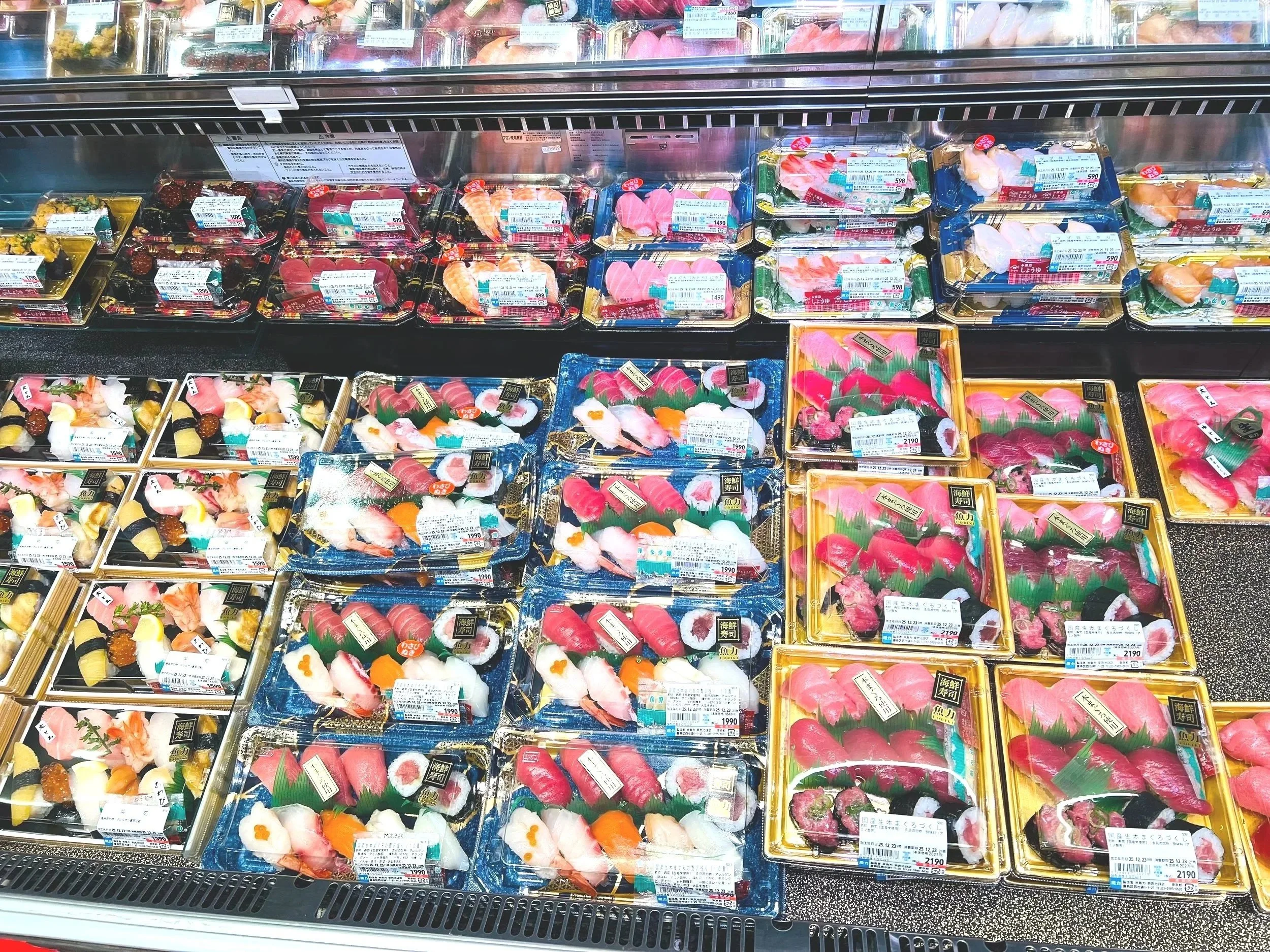
Sashimi without the price tag
Supermarkets are hands-down the best place to eat generous amounts of sashimi. Restaurants are still cheaper than abroad, but they’re pricey compared to ramen, teishoku, donburi, curry shops, or gyudon chains.
Hotel-room staples
I kept my fridge stocked with:
Unsweetened yogurt (Meiji Bulgaria is great)
Onigiri
Pickles
Giant Japanese apples
Natto
Hard-boiled eggs
I didn’t ban snacks — I just didn’t turn them into a hobby. A few processed treats out of curiosity is fine. Think of them as learning, not indulging.
Hotel breakfasts: choose carefully
Hotel breakfasts can either set you up for a great day or quietly undo your efforts.
What worked well:
Congee
Asian pickles
Natto
Vegetables (radish, mushrooms are often surprisingly good)
What I mostly avoided:
Curries (very salty)
Big piles of rice
Konbini wisdom
In other Asian countries, you have hawker stalls. In Japan, you have convenience stores like 7-Eleven, FamilMart, and Lawson.
You could honestly survive for years in a konbini.
When hungry, it’s easy to grab processed ready meals. Instead, I defaulted to:
Yogurt
Hard-boiled eggs
Roasted sweet potatoes (these are everywhere and fantastic)
Matcha or green tea bags for the hotel
I went easy on Famichiki. Bao were fine now and then.
Dessert: treat it like art
Japanese desserts are beautiful. Many pastry chefs train in France, and the masterpieces presented are almost too good to eat.
The good news? Portions are usually small.
My rule was simple: one dessert a day, max. Sit-down cafés tend to focus so much on presentation that half the table is cups, plates, and spoons — and the dessert itself is tiny. Embrace that. Don’t go filling the “empty space” with street ice cream afterward.
About kakigori (shaved ice / “bingsu”)
Kakigori is dangerously good. Fluffy snow ice, cream, mochi, beans — all of it.
One serving can easily feed three people. Share if you can. If the café insists on one order per person, you can try ordering a dessert and coffee between two of you. I loved Tsumiki in Kyoto – also for its enterprising nature of serving ice in winter.
And here’s a very Japanese lesson: you don’t have to finish it. Appreciating something doesn’t require eating every last bite. My son finished a whole one and felt awful afterward. That image cured me of overdoing it.
Street food = snacks, not meals
Markets like Asakusa are full of tempting street food. I treated it as entertainment, not sustenance.
Better choices:
Amazake (a lightly sweet fermented rice drink — great for adults and kids)
Matcha ice cream (small)
Grilled chicken skewers
I skipped the doughballs on sticks drowned in sauce. Shared food whenever possible. Ordered small.
Don’t forget the flight
Your trip doesn’t start at immigration — it starts on the plane.
On long flights, I drank green tea almost hourly while awake. Yes, it sends you to the bathroom. That’s the point. It forces you to move.
If caffeine worries you, bring ginger tea bags (they help to debloat, fast!) and ask for hot water. Or just drink water.
The result
I ate well. I tried new foods. I felt satisfied, nourished, and never like I was “on a diet.”
When I got home, my weight was exactly the same.
These principles work anywhere, not just Japan. You don’t have to stop being a foodie to stay healthy while traveling. In fact, paying attention like this often lets you experience local culture more deeply, practicing local habits and learning insider knowledge.
