
Healthy Korean Foods You Have to Try in Seoul (Plus What to Avoid!)
Wellness-forward, flavor-packed, and some insider, local eating tips from my trip!
The abundance of fascinating flavors, modernized year after year will never fail to tempt and dazzle any traveller to Korea. It is possibly one of my favourite destinations for culinary travel.
Seoul is a full-on sensory festival—neon streets, sizzling markets, bubbling soups. As a wellness traveler, I loved how nourishing the food was… but I also learned quickly that not every Insta-famous bite is worth the hype.
Here’s my guide to the healthiest, most vibrant Korean foods you should absolutely try, plus what to skip so you feel energized (not overloaded) while exploring the city.
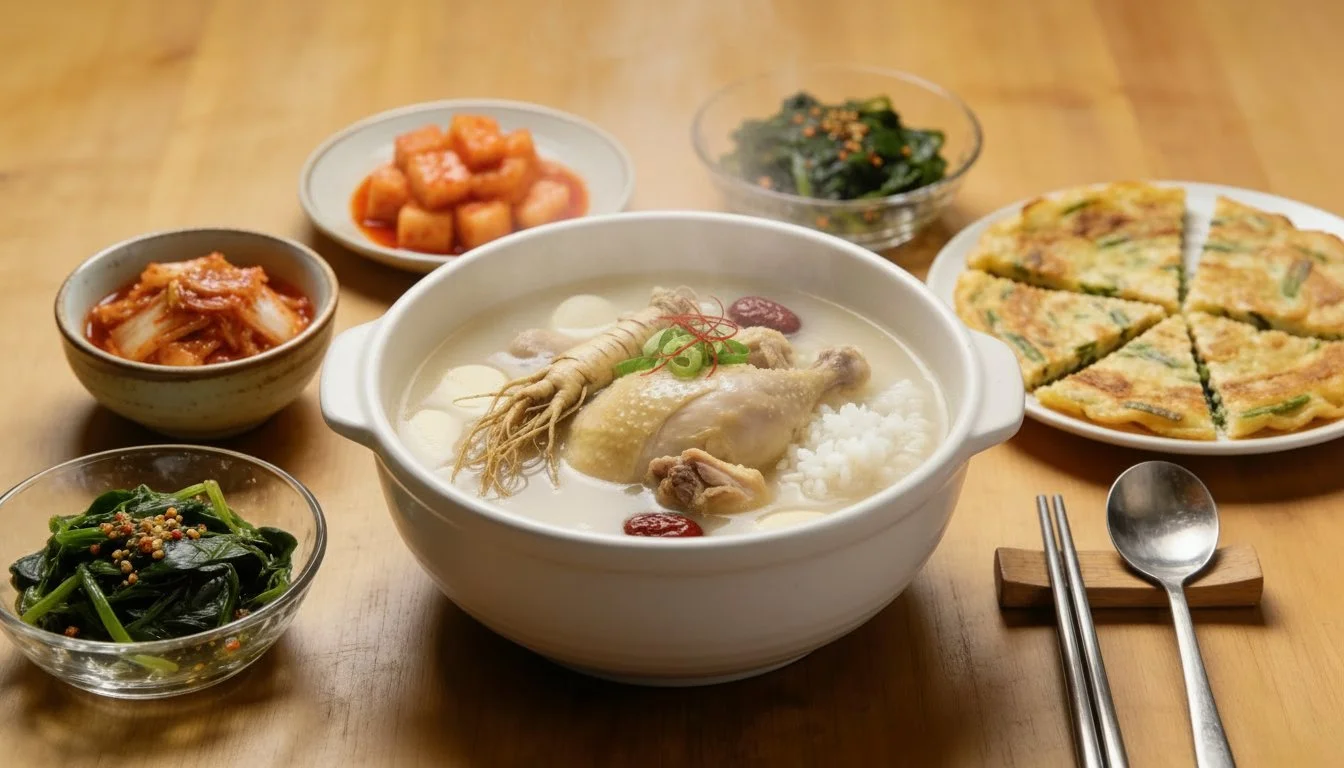
1. Samgyetang at Tosokchon and Baeknyeon Tojong: Pure Nourishment in a Bowl
Ginseng is a Korean national emblem and you’ll find it everywhere from restaurants to candy. The best way to consume ginseng is always paired with chicken, in hot soup – and this is true across virtually all Asian cultures. Now, if ever there was a completely satisfying, feelgood, exotic-yet-familiar meal-in-a-bowl, it would be samgyetang (what is it?)—a bubbling cauldron of ginseng chicken soup that serves up unexpected textures and flavors at each angle of your spoon. The difference with samgyetang is the milky white broth that emerges as a result of long cook times and emulsified fats and proteins. The glutinous rice inside also contributes to the milky, opaque look and feel.
Expect a very aromatic broth that adults and children alike will enjoy. The whole young chicken is stuffed with sticky rice, garlic, jujubes, and ginseng. Unlike many famous Korean dishes, samgyetang is low on chilli-spice, but you can always dial up spiciness with kimchi side dishes.
Why It’s Good for You
Collagen + lean protein
Easy to digest
Ginseng boosts circulation and vitality
Warm, soothing, restorative
What to Avoid
Pouring too much salt into the broth
Partake in the accompanying salt/pepper dip lightly—don’t dump it into the soup or it flattens the herbal flavor.
2. Banchan at Lotte Mall Food Hall: As mesmerizing as any food hall can get!
The banchan section at Lotte Mall is a wellness lover’s dream. Rows of tiny dishes—kimchi, lotus root, sesame spinach, marinated bean sprouts, pickled radish—make you feel like you’re tasting the whole spectrum of Korean nutrition in small, exciting bites.
Wellness Wins
Packed with probiotics (look out for fermented choices)
Loaded with fiber and antioxidants
Mostly plant-based
Varieties provide great value
What to Avoid
Overly sweet glazed dishes
Some banchan use syrupy marinades—taste first, buy second.
3. Korean BBQ at Wangbijib: Clean, High-Energy Grilling
Of course, K-BBQ is the thing to do when in Korea. Wangbijib will not let you down. Expect blue-ribbon quality, premium cuts of meat, coal-fired grills, quick-moving staff, and the hypnotic sizzle of perfectly marbled beef. You wrap the meat in crisp lettuce or perilla leaves with garlic, scallions, ssamjang, and kimchi. Best of all, you don’t need to work the grill yourself – an expert is on hand at every table. What could top that? The amazing fact that there is barely any food odor that lingers on you thanks to very effective smoke management.
Tip - for lean, surprising textures, try the beef tongue!
How to Keep it Healthy
Focus on high-quality protein
Add Fresh herbs + greens
Get more fermented sides for gut health
What to Avoid
Ordering only fatty cuts
Samgyeopsal (pork belly) is iconic, but mix in leaner cuts like sirloin or ribs to keep your edge.
4. Grilled Seafood in Myeongdong: Fresh, Simple, and Nutrient-Dense
The Myeongdong night market is extremely fun and a must do for any traveller. Among Asian night markets, this counts as one of the most civilized and clean. So clean, there are no bins in sight for miles. (Tip – return your trash at the stall you bought it from, or the next stall you patronize. There will be no issue with trash disposal that way. Otherwise, you might have to carry it around until you exit a 1km radius of the market). The food at this market is generally quite high-quality, but you should take good care to be judicious with heavily deep-fried “must-eat” items like kimchi pancakes and deep fried coconut shrimp (my favorite!) A rule of thumb for me is – start off with the highest protein, lowest carb items like: grilled scallop and shrimp skewers, charred squid, abalone. And then work your way towards classics like glass noodles (japchae), and spicy rice cakes (tteok-bokki).
What to Avoid
Gamja hotdog (Korean potato corn dog)
It looks amazing—crispy potato cubes, gooey cheese—but the taste rarely matches the hype. It’s heavy, greasy, and surprisingly bland unless coated in sugar.
Very sorry to say, the taste can be quite a let-down, so be prepared to share or release your purchase if you must get one for photo-op purposes!
5. Makgeolli: The Cloudy, Fizzy Drink Even Your Gut Will Love
Makgeolli (pronounced “makkoli”) is the iconic Korean alcoholic drink. Always served chilled, it tastes milky, slightly sparkling, subtly sweet, and packed with natural probiotics. You’ll see it everywhere in skin products and candles too. This drink has an incredibly unique scent that feels like home-brew goodness, and the sparkle on your tongue is so much fun. In my opinion, makgeolli is much more interesting than soju, though they are both just very different drinks. Makgeolli is a fermented rice brew, while soju is a distilled spirit, like vodka. Makgeolli comes in usually at 6-8% ABV, while soju is a lot higher, at about 12-20%.
How to Enjoy It Like a Local
Swirl the bottle before pouring—sediment settles. Many restaurants also serve it in a brass kettle, which adds to the charm of the experience
Drink from bowls, not glasses.
What to Avoid
Artificially flavored makgeolli
Strawberry or peach can be fun, but many versions are overly sweet. Some pricier options may even lack the signature fizz.
If you love makgeolli and want to make it yourself without too much fuss, many places even sell ferment-at-home powder kits!