
Three Exercises To Do in Your Mental Gym to Prevent ChatGPT-Induced Brain Flab
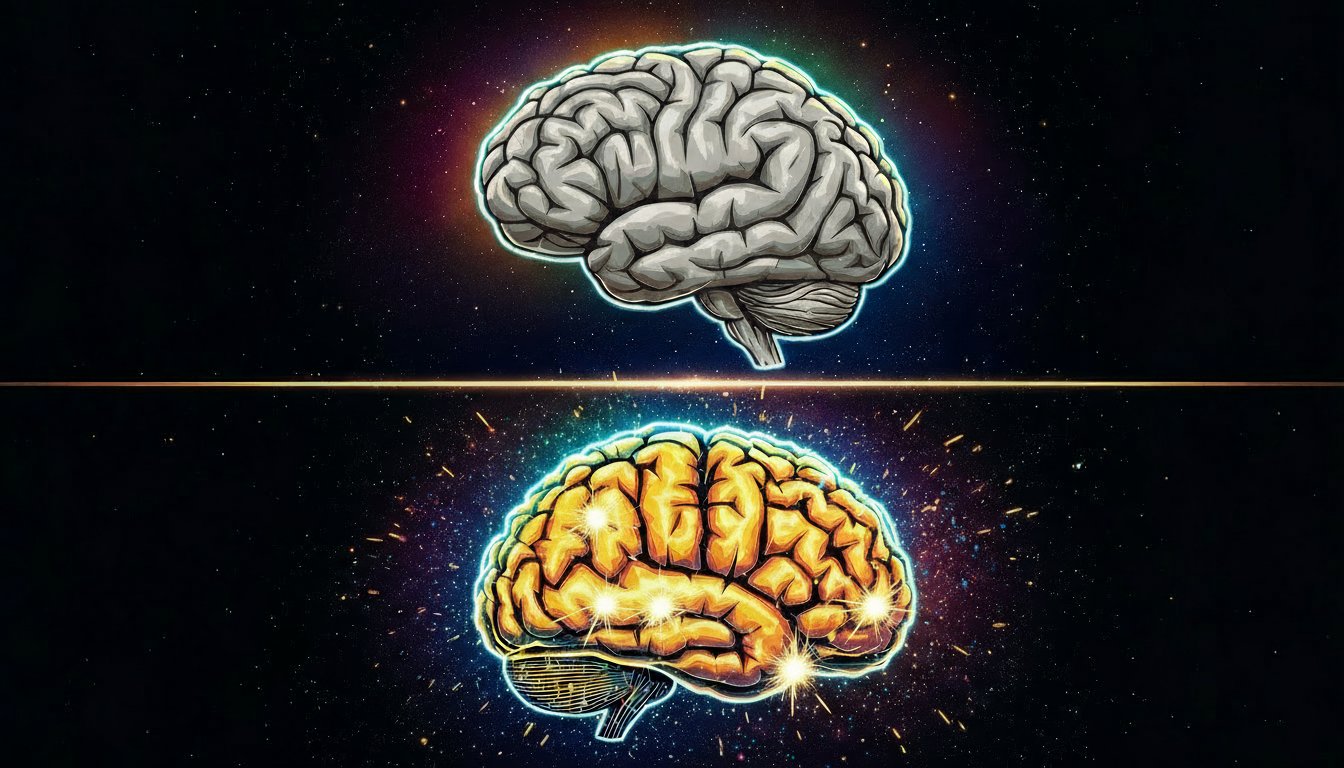
Can you keep your head when all about you, are losing theirs and blaming it on ChatGPT?
When AI takes huge cognitive load off us, we get the impression that our burdens have been lightened and we have saved so much time. We can now devote ourselves to cleverer things. But can we, and do we?
This mental outsourcing is seen as a way to free ourselves from repetitive work that form 70% of routine tasks and focus on the 30% that require the human touch of creativity and judgment. Yet, humans are increasingly relying on it to develop complex work products. There is a hidden cost to this: your brain is getting soft.
To clarify, I certainly don’t mean that we shouldn’t leverage AI to improve. On the contrary, it allows us to flex and catalyze deep thinking in ways not humanly possible – if we go about it the right way. But, don’t lean so hard on it that your mind gets saggy and your instincts become so blunt that every reflex to a problem is to “ask ChatGPT”. Just as cars were never meant to cause obesity, unexpected overreliance on any technology will have unexpected consequences.
A recent MIT study, found that users who relied on ChatGPT for essay drafting showed much weaker neural activity in the areas of problem-solving, memory, and concentration, compared to those writing without AI. It highlighted concerns that excessive reliance on LLMs may lead to cognitive atrophy (aka flabby brain) and showed a negative correlation between AI usage and critical thinking. While the study is not yet peer-reviewed, it is a warning signal to pre-emptively redesign our habits and reliance on AI.
Here are three exercises to start off:
1. Warm-Up – write the first draft yourself. That probably sounds painful to many who have grown accustomed to tweaking here and there, just enough to escape AI detectors. If that is too difficult for now, you must at least try to sketch the skeleton of your work unaided.
2. Strength Training – spar with AI. Even if you love what your bot wrote, challenge it to spot flaws. Ask “how can this be critiqued”? This has the added bonus of preparing you for questions from your boss / judges / media – whomever you are facing that day.
3. Cardio – train your intellectual endurance by redoing work. If you fully understand the text, you should be able to rewrite it. Always rewrite as much as possible. This helps you identify areas where your understanding may be shallow, and it increases memory retention. If you find gaps in your understanding, prompt it to explain it to you like a 12 year old. (In fact, many educators these days are teaching children to rewrite work in their own words after consulting AI. If your kids are not being taught this, step in quickly.)
Exercising to achieve a powerful body is a no-brainer for anyone. So, when it comes to the brain, remember that it is the organ that controls all your muscles. It is the physical manifestation of your mind and where you ultimately live. Remember to exercise it with the same dedication and passion you give to your marathons, SoulCycles, or Zumbas. By doing so, you are not only sharpening your mind, you are enhancing your longevity with the essence of who you are.